Sunday, December 31, 2006

The Latest in Nanotechnology

Nano-welds herald new era of electronics.

"We can create any 3D shape by varying the beam and rotating the target," he adds. Using this technique, the researchers have already made nano-scalpels 10 nm by 20 nm across and just a few nanometres thick. These scalpels can be used for cutting into living cells.

U.S. developing nanotech military armor
The U.S. Army awarded a $15 million contract for the development of a new type of lightweight composite armor based on nanotechnology.

...

Rice said the planned armor "will be even stronger than existing armor, but also lighter, to reduce the top weight of the 'up-armored' vehicle."

He also assured that engineers would be looking into reducing the flammability and flexibility issues inherent in many composite materials as an improvement in body armor.

The Year in Nanotech
Dazzling displays, handheld sensors, cancer killers, and nanotube computers.

...

Nanocures.
Conventional cancer treatment can wreak havoc on the body. So researchers are developing technology smaller than the cancer cells that can seek them out, slip inside, and deliver a dose of deadly cancer medicine, leaving healthy cells untouched.

...

As researchers race to develop new cancer-fighting nano tools, an important weapon will be computer modeling, which will help researchers identify materials and structures that can be used safely in the body. (See "Speeding Up Nanomedicine.") But perhaps the biggest impact of nanotechnology on health could be new ways of using nanostructures to purify water, since dirty water is a leading cause of disease worldwide.

AddThis Social Bookmark Button

Tuesday, December 26, 2006

The Latest in Robots

We'll All be Cyborgs Someday (This link acts weird in Firefox. the second time you visit it, it wil bother you with subscription information. Just use IE to view this, or clean your cookies in Firefox and then revisit the site)

Kevin Warwick, a professor of cybernetics at the University of Reading, has firsthand knowledge. In 1998, he had a chip surgically inserted into his left arm, becoming, he thinks, the first human ever implanted with a computer chip.

Since then, he's had a more sophisticated chip connected directly to his nervous system. He is still working toward his grandest experiment: having a chip implanted in his brain.

"I want to become a cyborg," he said with an infectious grin. "I can see the advantages."

...

In 2002, doctors sliced open Warwick's left wrist and implanted a much smaller and more sophisticated device. For three months, its 100 electrodes were connected to his median nerves, linking his nervous system to a computer.

"I moved my hand, and my neural signals were sent over the Internet to open and close a robot hand," he said.

Not only that: The robotic hand had sensors. As it grasped a sponge or a glasses case, it sent information back to Warwick.

"It was tremendously exciting," Warwick said. "I experienced it as signals in my brain, which my brain was quite happy to recognize as feedback from the robot hand fingertips."


A Robot in Every Home
...I can envision a future in which robotic devices will become a nearly ubiquitous part of our day-to-day lives. I believe that technologies such as distributed computing, voice and visual recognition, and wireless broadband connectivity will open the door to a new generation of autonomous devices that enable computers to perform tasks in the physical world on our behalf. We may be on the verge of a new era, when the PC will get up off the desktop and allow us to see, hear, touch and manipulate objects in places where we are not physically present.

UK report says robots will have rights
“If we make conscious robots they would want to have rights and they probably should,” said Henrik Christensen, director of the Centre of Robotics and Intelligent Machines at the Georgia Institute of Technology.

...

Robots and machines are now classed as inanimate objects without rights or duties but if artificial intelligence becomes ubiquitous, the report argues, there may be calls for humans’ rights to be extended to them.

...

“There will be people who can’t distinguish that so we need to have ethical rules to make sure we as humans interact with robots in an ethical manner so we do not move our boundaries of what is acceptable.”

Robots of the Future
First there was the DARPA Grand Challenge, a robotic contest for building a driverless car capable of successfully completing a 132-mile off-road course. In November 2007, DARPA will throw down the gauntlet once again in the form of the Urban Challenge. This contest raises the bar by requiring its autonomous contestants to negotiate a 60-mile course through simulated urban traffic in less than six hours. Bookies' favorite is likely to be Sebastian Thrun and his team of roboticists from Stanford University, CA, who won the last challenge, in 2005.

Conscious computing debated at MIT anniversary event

The question of whether machines will be capable of human intelligence is ultimately a matter for philosophers to take up and not something scientists can answer, an inventor and a computer scientist agreed during a debate late last month at the Massachusetts Institute of Technology.

What if your laptop knew how you felt?
Faces reveal emotions, and researchers in fields as disparate as psychology, computer science, and engineering are joining forces under the umbrella of "affective computing" to teach machines to read expressions. If they succeed, your computer may one day "read" your mood and play along. Machines equipped with emotional skills could also be used in teaching, robotics, gaming, sales, security, law enforcement, and psychological diagnosis.

In Pictures: Robot Menagerie

AddThis Social Bookmark Button

Monday, December 25, 2006

The Latest in Biotech

Continued Support From the Glenn Foundation for Medical Research

In response to the recent progress report from Methuselah Foundation chairman Aubrey de Grey, we are pleased to note that the Glenn Foundation for Medical Research has stepped forward in greater support of Foundation-funded SENS research with the offer of an additional $50,000 donation.

Paul F. Glenn, founder of the Glenn Foundation, said, "We have been following the progress of Aubrey de Grey's ideas with interest, and the Thiel matching pledge allows us to leverage our funds in a highly efficient way."

Filter removes mad cow proteins from blood
A new filtering device can remove dangerous “mad cow disease" proteins from blood. Scientists say the device could prevent the spread of deadly prion diseases via blood transfusions.

At least three people have died in the UK after receiving blood contaminated with variant Creutzfeldt Jakob disease (vCJD) – the human equivalent of mad cow disease. There is currently no test available to screen blood for the misfolded “prion” proteins that cause the illness.

The new “P-Capt” filter designed by Robert Rohwer of the VA Medical Center in Baltimore, Maryland, US, and colleagues aims to make blood safer by removing these proteins. Their tests show the filter can prevent infections in hamsters and can remove the vCJD prions from human blood.

Military college to set up stem cell research centre
'Stem cell therapy is the futuristic regenerative or reparative medicine. It will be the futuristic treatment replacing drug therapy and surgery. Through stem cell treatment, heart diseases, diabetes, Parkinson's disease, epilepsy, multiple sclerosis, eye and muscle disease and various other diseases can be cured,' Surgeon Vice Admiral V.K. Singh, the Armed Forces Medical Services director general, told IANS.

...

'We are not playing god. Our intention is not to create a super human being but to repair diseased and damaged human tissues and organs,' said Col. Harsh Kumar, head of the Department of Transfusion Medicine, AFMC.

'Stem cell therapy, a futuristic treatment in medicine, is all set to revolutionise and replace drug-based treatment as stem cells have the potential to form parts of the human body. It is absolutely achievable,' he added.

AddThis Social Bookmark Button

Thursday, December 21, 2006

The Future of Brain Surgery

With Lasers and Daring, Doctors Race to Save a Young Man’s Brain.

The idea is deceptively simple: instead of cutting a hole in the brain artery and then sewing a vein to it, he sews first and cuts later. That way, the artery does not have to be temporarily clamped, and blood flow to the brain is not cut off. A excimer laser is used to make the hole because it can be slipped into a tight space on the tip of a slender tube and makes a clean cut that stays open without burning nearby tissue.

AddThis Social Bookmark Button

Major Breakthrough in Aging Research

Dnage Scientists Report Major Breakthroughs In Ageing Research.

While the link between DNA damage and ageing had been established before it has now been shown that the level of “repair-problems” is directly correlated to the severity of the resulting ageing-diseases. The findings indicate that inadequate DNA repair results in accelerated ageing that strongly resembles the processes of natural ageing in older organisms.

Importantly, it was demonstrated that the body activates various natural defence-mechanisms against the accumulation of DNA-damage in order to delay the development of ageing diseases. This indicates that DNA-damage and DNA-repair are very important targets for new products in the field of ageing diseases. Learning from the body’s own response as described by these scientists, the Company is now testing compounds that may eventually lead to products that delay the development of ageing diseases such as Osteoporosis and Neurodegeneration (diseases of the brain including Alzheimer’s and Dementia).

Big news from my home country.

I've seen it on the news just a few minutes ago. The spokesperson said that it would take anywhere from 7 to 9 years to develop drugs based on this breakthrough.

With a breakthrough this important, you'd think some people could be moved to action in order to accelerate the realisation of anti aging drugs.

The implications are quite big.

AddThis Social Bookmark Button

Wednesday, December 20, 2006

9 Military Technologies We Want

9 Military Technologies We Want.

1. The SmartShirt: Wearing your heart rate on your sleeve

2. Powered Exoskeleton: The real bionic man

3. Liquid Body Armor: Shielding by the glass

4. Micro Spy Plane: Voyeurs drone on

5. GT Max Mini Helicopter: Toys get smart

6. The Sonic Bandage: Sounds like clotting

7. Gryphon Flying Wings: It's a bird! It's a plane! …No, it's just a guy wearing a wing

8. Cornershot: Shooting's right around the corner

9. Swiss Military Pen: Writing's the easy part

AddThis Social Bookmark Button

Monday, December 18, 2006

Our Technological Future - Mixed Bag #7

Many people don't keep a lasting impression of individual articles reporting on technological breakthroughs.

That's why I collect a bunch and post them altogether. There's 36 of 'em!

Dear reader, have a look at your technological future!

300GB Holographic CD’s will be available this week

In the beginning: scientists get ready to hunt for God particle

A Quantum (Computer) Step: Study Shows It's Feasible to Read Data Stored as Nuclear 'Spins'

Stem Cell Experiment Yields Heart Valves

Kurzweil: Computers Will Enable People To Live Forever

Thinking Machines

Robot with 'human soul' explores remotely


Bionic foot for hit and run victim

Cornell robot is "conscious," adapts to injury

Teeth: a future renewable natural resource?

Ray Kurzweil: Computers Will Extend Human Lifespan

AI Seduces Stanford Students

Life at 140? Longer life spans up for debate


SKorean robot will walk the walk as well as talk the talk

Cosmic Duo Spins Matter From Light

Stem cell cure hope for back pain

Genetically engineered blood protein can be used to split water into oxygen and hydrogen

Scientists harness mysteries of the brain

Stem Cells Are Where It's At

The future of discs: 10TB CDs

Distance no worries for spooky particles

Computers that digest the news to change trading

Forget HDTV, the future is 3DTV

GM Plug-in Hybrid to Deliver 70MPG

All but Ageless, Turtles Face Their Biggest Threat: Humans (This is not directly a tech-link, but it does discuss a turtle-species that does not age. It is an example of the fact that immortality is completely natural. This is relevant to life-extension and thus relevant to this blog.)

As population ages, opportunities are born

Self-assembling Nano-ice Discovered -- Structure Resembles DNA

Is thorium the answer to our energy crisis?

Kevin Warwick: The ITWales Interview

10 Tech Concepts You Need to Know for 2007

Toronto scientists cure disease in mice

New Hope for Stem-Cell Therapy

Triple-blinded Study of StemEnhance

Welcome to the world of nano foods

More Doctoral Research Funded by the Methuselah Foundation

Hitachi Brain Interface Allows Users to Control Model Trains

AddThis Social Bookmark Button

Thursday, October 26, 2006

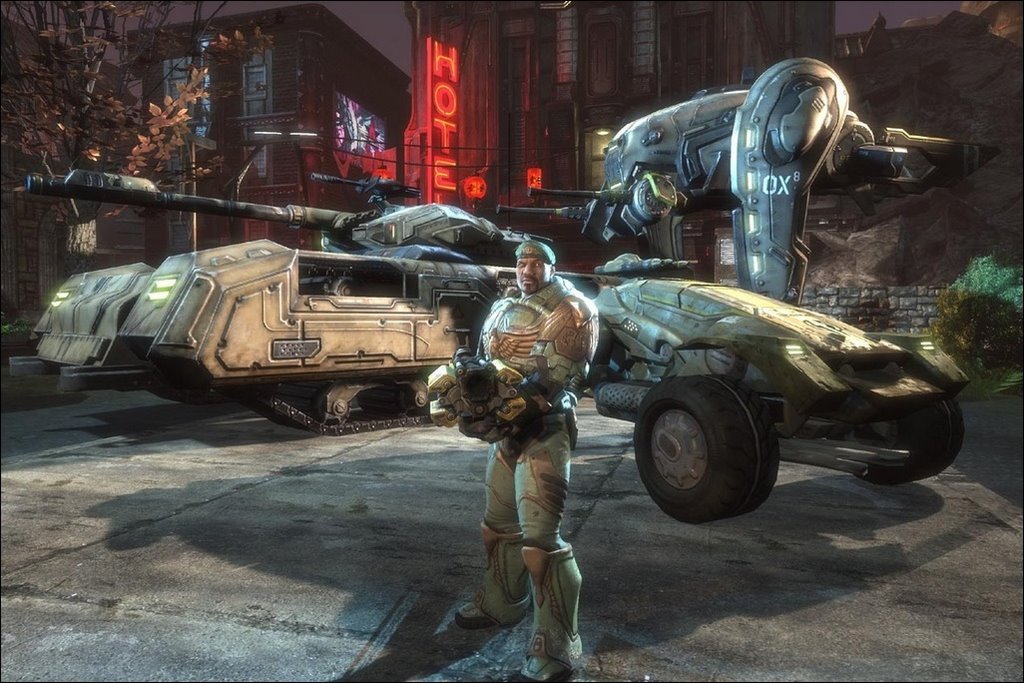
Crysis - Next Gen Game Footage

Crysis Video.

This new video showcases many new Crysis gameplay features and gives a very detailed look at the environments and outlines the story line as well. I think many companies are counting on Crysis as being “the” title to truly kick off DX10 and Windows Vista while being an exciting motivation for more enthusiasts to upgrade their hardware. To put it in technical terms, it looks like the upcoming Crysis is going to kick some serious ass.

Also check out these PS3 commercials. The visuals are stunning.

PlayStation 3 Commercial 1

PlayStation 3 Commercial 2

AddThis Social Bookmark Button

Thursday, October 19, 2006

Next Generation Videogames

Have a look at these screenshots of confirmed, next-generation videogames.

Flight simulator:


Crysis:

Alan Wake:

Unreal:

These will be the standard in the near future.

Are you looking forward to them?

I know I am.

:)

AddThis Social Bookmark Button

Wednesday, October 11, 2006

3D Models From 2D Images

Right after posting sketch interpretation comes this little jewel that is at least as impressive: 3D Models From 2D Images.

I would not have thought that this was possible. Just imagine... soon we will be able to build 3D environments simply by drawing them and having them automatically generated.

Game developers often hire concept artists and modellers. The artists draw some sketches of how the game is supposed to look. The modellers then manually build 3D models based on these sketches.

Looks like the modeller jobs are about to automated.

Too bad for those poor modellers, but it's going to be one helluva lot cheaper to and easier to build cool games.

More info.

Yet more info.

AddThis Social Bookmark Button

Tuesday, October 10, 2006

Great Sketch Interpretation Tool

The term "sketch interpretation" may not get people on the edge of their seats all by itself... but wait until you've seen the demonstration of what it can do: Sketch Interpretation.

The idea is that you can draw anything and the software will understand what you have drawn. Not only will it understand, it will apply the proper physics to it. You've gotta see it to get it. The movie clip shows a guy drawing a car going down from a hill, and then the software actually makes it happen.

This is a great tool for people who want to build their own videogames or virtual environments. It's tools like these that will ensure that we will have a very rich Internet-experience a few years in the future, when every site you visit will be a 3D environment.

In general, technology like this simply allows people to easily build stuff that's cool.

A link to the official site: ASSIST.

AddThis Social Bookmark Button

Cure for Baldness - Government Spends 2 Million Pounds

£2m to find cure for baldness

The Government is spending £2million to find a cure for baldness.

Science minister Lord Sainsbury says he wants the UK to become the world leader in hair restoration.

He is supporting a new treatment called Biotechnology, reports The Sun.

During the treatment the hair cells are grown in a test tube then injected into a bald pate.

He said: "Biotechnology provides a real opportunity to harness the world-class expertise we possess in Britain.

"This initiative should establish British industry as the world leader in this area."

The treatment is being developed by UK firm Intercytex, set up by biochemist Dr Paul Kemp.

He said: "Analysts estimate a good baldness treatment could be worth £1billion a year in Britain and many times that worldwide. The idea is to inject cells into the scalp, where many will develop into new hair follicles.

"Current hair transplant techniques take a long time so they cost a lot. This new procedure would be faster and cheaper."

AddThis Social Bookmark Button

100 MPG Toyota Prius Planned for 2009

Ultra-Green: Radical 100-MPG Toyota Prius in the Works for 2009

Expect something amazing from the next Toyota Prius — like fuel economy that pushes past the 100-mpg barrier.

Due in two years as a 2009 model, the next Prius is set to be an evolution, company sources say. The hybrid will retain the same basic 1.5-liter hybrid drivetrain. But Toyota is now on a mission to do two things: drive the economy ratings skyward, and cut the associated costs by 20-30 percent.

AddThis Social Bookmark Button

Fembot - Female Robot

A movie clip of a fembot that looks really real.

I'm gonna save up and buy me one in 2020, when you can't distuingish them anymore from biological women. ;)

AddThis Social Bookmark Button

Saturday, October 07, 2006

Our Technological Future - Mixed Bag #4


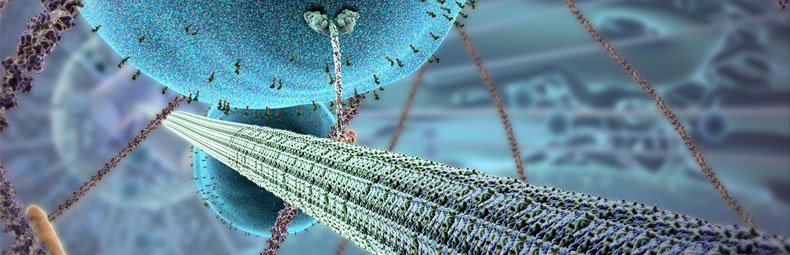
Fantastic animation of the insides of a cell. This is just an animation. But there is no reason it could not be a simulation in the future. And sophisticated simulations of cells are powerful tools that will speed up medical research by orders of magnitudes. This will have a great impact on public health. We will live longer and more healthy because of it.


Robot cars will race in real traffic

The first 11 teams for a race in which robot cars will jostle with real ones along mocked-up city streets have been announced. The teams must construct autonomous vehicles to navigate an unfamiliar urban environment in the shortest time possible.

$10 million to speed up the personal genome
The X Prize Foundation, sponsor of a widely noted 2004 award for developing a reusable rocket suitable for private space travel, says it is now teaming with a wealthy Canadian geologist to offer $10 million to any team that can completely decode the genes of 100 people in 10 days.

Truth predictor for politicians
He forecast that, within five years, "truth predictor" software would "hold politicians to account". Voters would be able to check the probability that apparently factual statements by politicians were actually correct, using programmes that automatically compared claims with historic data, he said.

Scientists teleport two different objects
Beaming people in "Star Trek" fashion is still in the realms of science fiction, but physicists in Denmark have teleported information from light to matter bringing quantum communication and computing closer to reality.

AddThis Social Bookmark Button

Wednesday, October 04, 2006

100 Technology Forecasts

PC World came up with this list of 100 forecasts, of which I have listed an interesting selection for your reading pleasure.

Accurate Speech Recognition
Though the vendor of the Dragon NaturallySpeaking speech-recognition program claimed an accuracy of 99 percent, in our recent tests the application managed an accuracy of only about 96 percent--not bad, but not good enough. We don't need perfection, but we are looking forward to a speech-recognition system that is fast and accurate enough to replace a keyboard for writing.

Memory That Doesn't Forget
Your existing PC memory gets amnesia when the system power goes off, but NRAM (nanotube nonvolatile RAM) remembers everything, and is as fast as modern memory. With NRAM, your PC could turn on and off immediately, dispensing with all of its tedious booting up and shutting down.

Nanotube Heat Sinks
Modern PC components produce a lot of heat, but carbon nanotube heat sinks will conduct that heat away better than existing metal ones do. See "The Future of Nanotech" for more details on how nanotechnology will revolutionize computing.

Quad-Core Processors
Dual-core processors have given PCs a big speed boost, but the advances won't stop there. Quad-core systems from Intel will arrive before the end of the year, and AMD's quad-core chips will hit the market in mid-2007.

TVs Out of Thin Air
The Helio display can create a TV out of nowhere, projecting an image onto a curtain of compressed air. Right now it is prohibitively expensive (around $20,000), but the price will fall as the technology matures.

One-Box Surround Sound That Works
If products such as Yamaha's promising $1700 YSP-1100 Digital Sound Projector continue to improve (and become affordable), complex surround-sound wiring could become a thing of the past. The YSP-1000 uses 40 beam drivers to focus surround precisely, creating a convincing surround effect out of just one box.

2015's New Mainstream Camera: 20 Megapixels
The price of digital cameras will continue to slide, while the resolution will continue to increase. Analyst Ron Glaz of IDC thinks that shoppers will be able to buy a 10-megapixel camera for less than $300 by the end of 2007, and a 20-megapixel camera for less than $300 by 2015.

A Shift From 2D Photos to 3D Environments
The increased processing power of computers allows for new ways to handle images. The Photosynth project from Microsoft, for instance, takes a group of 2D photographs and transforms them into a 3D environment that provides a whole new way to browse pictures.

Console Wars 2012
Despite Sony's and Microsoft's protests that this year's game consoles will last longer than previous ones, game consoles have five-year life spans. So, in the December 2012 issue of PC World, we'll be reviewing the new PlayStation 4 and Xbox 720 game consoles, which will have photorealistic 3D games and high-def movies streamed over the Internet.

Smarter Games
The advent of multicore processors gives game programmers a lot more processing power to create smarter adversaries in games: For example, one core can be dealing with running the game, while the other is running an artificial intelligence (AI) routine that creates hordes of smart enemies. And your opponents won't just sit and wait for you, either--they'll hunt you down.

Robots, Part 1: Death to Allowances
Teenagers' options for earning money at home will shrink greatly as single-duty robots take over household chores. A 2004 United Nations report on World Robotics predicts that prices for grass-cutting, pool-cleaning, and window-washing robots will become affordable by 2007, and some 4 million robots will be in use by the end of that year.

Robots, Part 2: Hope It's Not the Terminator
While the world now has a robot that can run 4 miles per hour--Honda's ASIMO--Stephen Keeney, the ASIMO project leader, hopes that by 2017 folks will see the first application of a truly humanoid robot.

AddThis Social Bookmark Button

Amazing Physics Simulation

Havok 4.0

It's at least as impressive as the Intel Quad Core Alan Wake game demo that I posted not too long ago.

AddThis Social Bookmark Button