Sunday, August 27, 2006

Enzymes Make Use of Quantum Effects

Upcoming drug revolution takes a quantum leap.

British scientists have found that enzymes cheat time and space by quantum tunnelling - a much faster way of travelling than the classical way - but whether or not perplexing quantum theories can be applied to the biological world is still hotly debated.

Until now, no one knew just how the enzymes speed up the reactions, which in some cases are up to a staggering million times faster.

"Our research has shown at an atomic level how enzymes act as catalysts," said Nigel Scrutton, lead researcher at the University of Manchester, whose team published their work in the U.S. journal, Science, on April 14.

Just how these enzymes speed up reaction rates compared with uncatalysed reactions remain controversial among scientists, but such insights of the underpinnings of enzyme behaviour have begun.

"Enzymes are central to the existence of life because most chemical reactions in our cells would take place too slowly or produce a difference outcome without their involvement," he said.

Without enzymes, we'd wither away or be riddled with disease.

As biological molecules, the enzymes work to lower the energy needed for a reaction to occur. Although enzymes act as catalysts, they are often affected by other molecules. Therefore, when drugs are made, they are designed to act as enzymes inhibitors to stop the reactions from occurring.

"The findings are a radical departure from the traditional view of how they work and might explain why attempts to make artificial enzymes have so far been disappointing," he said.

But now that researchers know enzymes can quantum tunnel, better drugs can be designed leveraging this knowledge.

AddThis Social Bookmark Button

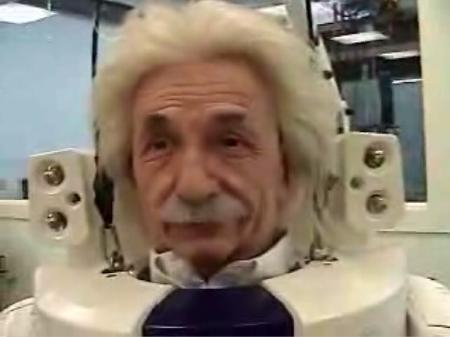
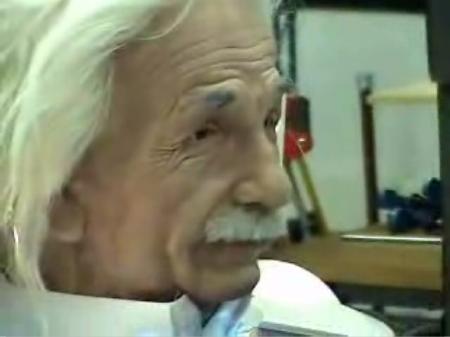
Einstein Robot Looks Almost Completely Real

Just found this on YouTube.

The robot looks so real, it's bizarre.

This made it much easier for me to see how robots may one day intermingle with us without us being able to clearly distuingish between robots and biological humans.

Einstein Robot.


AddThis Social Bookmark Button

Thursday, August 24, 2006

Our Technological Future - Mixed Bag #1

Embryonic stem cells without embryo death.

You don’t have to destroy an embryo to create stem cells for medical research. An American biosciences company has succeeded in deriving the cells from embryos without killing them, raising hopes that President Bush will reconsider his veto on federal funding for such work.

...

Lanza hopes that because the method does not involve destroying embryos, it will lead to the lifting of the veto on federal funding for stem cell research. “We need to jump-start the field – it’s been crippled by a lack of funding,” he says. “This will hopefully solve the political impasse and bring the president on board, as no embryos will be harmed with this method.”

The Future of Robots.
Once we understand how the mind operates, we will be able to program detailed descriptions of these principles into inexpensive computers, which, by the late 2020s, will be thousands of times as powerful as the human brain—another consequence of the law of accelerating returns. So we will have both the hardware and software to achieve human-level intelligence in a machine by 2029. We will also by then be able to construct fully humanlike androids at exquisite levels of detail and send blood-cell-size robots into our bodies and brains to keep us healthy from inside and to augment our intellect. By the time we succeed in building such machines, we will have become part machine ourselves. We will, in other words, finally transcend what we have so long thought of as the ultimate limitations: our bodies and minds.

Nanosolar: Printing Solar Film Like Paper.
Nanosolar is a company based in Palo Alto, California, which uses an innovative technique to produce a kind of "solar film". To make the film, Nanosolar prints CIGS (copper-indium-gallium-selenium) onto a thin polymer using machines that look like printing presses. There is no costly silicon involved in the process, and, ultimately, a solar cell from Nanosolar will cost about one-fifth to one-tenth the cost of a standard silicon solar panel. Nanosolar is only a few years old, but it has laid plans to take on multinational corporations, such as BP and Sharp, in the solar industry.

Computers write news at Thomson.
First it was the typewriter, then the teleprinter. Now a US news service has found a way to replace human beings in the newsroom and is instead using computers to write some of its stories.

Thomson Financial, the business information group, has been using computers to generate some stories since March and is so pleased with the results that it plans to expand the practice.

The computers work so fast that an earnings story can be released within 0.3 seconds of the company making results public.

Chaos Computing.
Ditto's chip is like the microelectronic version of a stem cell: It's a device that can assume all sorts of different functions. But a chaotic chip goes one step further: It can morph over and over again. For computer design, this has huge implications. In a traditional chip, the basic elements, called logic gates, are hardwired to perform a single, specific task. In a chaotic chip, each logic gate can be converted on the fly to perform any function.

What this means is that computers will no longer need separate, costly chips for the CPU, memory, video RAM, graphics accelerators, arithmetic processing units, and so on. Instead, one chip will convert itself to whatever functions the software needs at a given moment.

3-D TV That Actually Works.
I entered a conference room in Manhattan and a woman on the TV tossed a handful of rose petals out of the screen, where they floated in the air before my eyes.

At least, that's what I saw. In truth, the image resided on a perfectly flat, 42-inch LCD screen. But the 3-D illusion was fully believable, and I didn't have to wear a dorky set of polarizing glasses.

A new line of 3-D televisions by Philips uses the familiar trick of sending slightly different images to the left and right eyes -- mimicking our stereoscopic view of the real world. But where old-fashioned 3-D movies rely on the special glasses to block images meant for the other eye, Philips' WOWvx technology places tiny lenses over each of the millions of red, green and blue sub pixels that make up an LCD or plasma screen. The lenses cause each sub pixel to project light at one of nine angles fanning out in front of the display.

AddThis Social Bookmark Button

Sunday, August 20, 2006

Government Backs Intelligent Robot Development

Govt to back intelligence robot development.

Japan's Ministry of Economy, Trade and Industry plans to begin assisting the development of next-generation intelligence robots in fiscal 2007 with the aim of commercializing them in 2015, Jiji Press learned Thursday.

The ministry is set to seek 2.1 billion yen in related funds as part of its budget request for the fiscal year that starts next April, and will assist the development of basic technologies in the next five years, informed sources said.

Intelligence robots are capable of recognizing sounds and images through sensors and of automatically analyzing the obtained information to determine their actions. Conventional industrial robots require input work patterns before they can operate.

For the government-funded development project, the ministry will seek the participation of universities and manufacturers that conduct research into artificial intelligence and sound and image recognition technologies, the sources said.

It hopes to commercialize the newly developed robots by 2015. The robots will include "cleaning robots" that, equipped with the plan of a building, will be able to choose the most appropriate routes to reach areas that need cleaning, and "guide robots" capable of communicating with humans through advanced voice and image processing technologies.

Reflecting a surge in the number of industrial robots in the past 10 years, there are some 840,000 robots operating at present across the globe.

In Japan, the market for industrial robots is expected to expand to around 3 trillion yen over the next decade.

Against this backdrop, the government acknowledges that intelligence robots constitute one of its core strategies for economic growth.

AddThis Social Bookmark Button

Tuesday, August 15, 2006

Single Molecule Stores Data

Single molecule stores data.

IBM researchers in Zurich, Switzerland, have demonstrated a single-molecule device capable of repeatedly storing and retrieving data.

Described in the Aug. 4 issue of nanotech journal Small Times, the device is a surprisingly simple organic compound that can be set to high or low resistance through electrical pulses. In the lab, it reliably retained its ability to change states over many hours and more than 500 tests, which the researchers described in the paper as "a remarkable result for a single-molecule system."

"Right now, we are concentrating on understanding the relationship between the design of the molecular system and the electrical properties measured," researcher Heike Riel told ZDNet UK. "Our next steps are to investigate the mechanism responsible for switching."

The molecule at the heart of the system, BPDN-DT, was designed by professor James Tour and co-workers at Rice University in Houston and is one of a class of compounds called Tour wires. Although it was specifically synthesized to operate in this and other devices--it has also been used in a single molecule transistor--there is still considerable debate as to how it works and what characteristics any potential commercial application may have.

...

At about 1.5 nanometers long, the molecule is less than a hundredth of the size of current silicon memory elements. It is widely accepted in the industry that current progress in silicon will become economically more difficult below 20nm, with fundamental physical limits being reached below 10nm. IBM says it sees molecular computing as one way of pushing past this barrier, as well as semiconducting wires, carbon nanotubes and spintronics.

AddThis Social Bookmark Button

Thursday, August 10, 2006

Shorter, 4-6 Hour Workdays Would Benefit Us All

Call for six-hour work day.

Working four to six hours a day is the key to happiness, according to a new report.

In the quest for money and status, Australians are among the hardest workers in the world.

But Sydney University academic Dr Caroline West says while work delivers self-esteem, income and social ties, more than four to six hours a day will bring anxiety, exhaustion and a poor quality of life.

"We've structured our lives so the majority of our waking life is devoted to work, which might bring us more money but doesn't make us more fulfilled," Dr West said.

"So long as there's a trend to work these really long hours you'll continue to see the plateauing and decline of people's wellbeing."

Dr West said almost a third of Australian full-time workers worked more than 48 hours a week and 30 per cent worked 50 hours or more.

After analysing a range of studies over the past few years, Dr West, who has published her findings in the Australian Law Reform Commission Journal, says the idea of a six-hour day is not a fantasy.

"I don't see any reason why it can't realistically happen," she said.

"It's going to require a lot of structural reform, but I think the time is ripe for addressing it as an issue."

She said the concept of the four- to six-hour working day - originally flagged by economist John Maynard Keynes in the early 1900s - would even help productivity.

But with competitiveness and the quest to "outdo one another" ingrained in society, most people weren't convinced that working less would make them happier, she said.

Dr West's research shows most people would rather work longer hours and have more money than have extra leisure and family time.

She said people who don't have money and who don't value work as their number one priority often risked being ostracised, or dubbed as lazy.

"It's difficult to be someone who places priority on leisure if you're surrounded by people who just care about money, or care about it more than other things," Dr West said.

For now, only a select privileged group with alternatives such as job sharing arrangements could afford the shorter hours, she said.

It's quite a pathetic situation. The article actually says people would rather work long and hard than be with their families and friends.

Well, not me. I've had exactly one year of working experience and I've watched it steadily suck the soul right out of me without being able to do anything about it. Up till now, that is. My contract allows for me to switch back to 4 days a week, which is exactly what I'll be doing a few weeks from now. The arrangements are being made right now at my company.

You may be wondering why I am posting this, as it has nothing to do with technology at first sight.

Here's why:

Technology is what is responsible for industrial revolutions which have great impact on our society. With every industrial revolution, the quality of our lives has increased by lessening our workload.

Think about it:

We started out as cavemen, running around in the jungle for about 25 years fighting off sabretooth tigers and grizzly bears.

Then we built societies for ourselves and we started working on the land. Work was still physical and hard, but at least we had the protection of the village or town.

Then we built machines. Still lots of physical work, but the workday eventually decreased to 10 hours. Henry Ford later decreased the workday further to 8 hours.

Welcome to today. We're still working 8 hours, but most of it is intellectual now. Light-load office jobs.

The first reports of people wanting more free time (as opposed to what the article states) are already coming in. Also, research has showed that a 4 day workweek makes people more productive, provided the work is properly planned. I heard this on the radio while plowing away at my lame 5 days / 8 hours job. And yet we all kept going at it as if we didn't hear it.

After all those industrial revolutions, life is still crap. We sleep one third of our time, work one third of our time and a great deal of the other third is spent doing things that are absolutely necessary, such as travelling (to work, blegh), bathing, shopping, preparing food, eating, etc. We are rewarded only with much too short weekends and too few days off, in which nobody has any time for anybody because we're too busy doing other things that need to be done.

Virtually no time is left for personal development. And somehow we are expected to maintain our social contacts and find girlfriends in this little bit of time as well. Some people are really good at accepting this situation. They apparently have no problem shoving their own desires aside and are happily grinding away, fulfilling their role as a miniscule gear in our beautiful system.

They're lying to themselves. Would they really spend 8 hours a day doing their current job if they were free to decice what to do? Have these people been brainwashed to such a degree that they cannot function without the system holding a double-barreled shotgun to the back of their heads?

Slaving away your entire life just to buy a pile of bricks and rooftiles seems like a poor man's life to me. But who the hell am I. Just some nutcase who manages a techblog in his spare minutes, I recon.

But there is hope.

Thanks to exponential acceleration in our technological progression, we are seeing industrial revolutions following up much faster. Soon, we can expect one every few years. And with every revolution, life gets better.

The first revolution we will see in about ten years, is that of nanotechnology which has the potential to make products extremely cheap and outperform our current products by about a factor of thousand. Recent developments suggest robots will soon be entering the mainstream and they will be taking plenty of our jobs away. You'd think this would cause huge economic depression. But keep in mind that if our economy is entirely automized, robots will be doing all the work and we'd be free to party all day singing yippee yippee.

So it seems to me we've all got something to look forward too.

It sure is a shame I was born in 1978, though. I'd rather be born in 2000.

Then again... having gone (and still going) through this barbaric society, I might actually not take all of tomorrow's technology for granted.

Because that's exactly what young people growing up right now will be doing.

But me... I've gone through the cesspit of the backwards eighties and nineties...

Tomorrow's technology might actually make me happy.

All I have to do is hang in there...

AddThis Social Bookmark Button

Sunday, August 06, 2006

Hybrid Full-Sized Trucks Debut in 2007

GM To Debut Hybrid Full-Sized Trucks in Fall '07.

General Motors is planning a fall 2007 launch for its highly anticipated so-called "dual-mode" or two-mode gas/electric hybrid version of the 2007 Chevrolet Silverado and GMC Sierra full-size pickup trucks.

Company insiders tell Inside Line the hybrid version of the trucks will see a 25 percent improvement in fuel economy over the conventional trucks, with a combined city/highway fuel economy rating of 25 mpg. The hybrid trucks will also be outfitted with a new V8 engine with an unspecified displacement that makes approximately 365 horsepower and 350 pound-feet of torque.

Both the Chevrolet Silverado and GMC Sierra are capable of using the new hybrid system. It is unclear which truck will be the first to get the hybrid system — or whether both will get it at the same time. However, because of the hybrid's anticipated expense — at least $3,000 more than the gas-powered versions of the trucks — GM may be leaning toward introducing it first in the GMC-brand trucks, which are aimed at a more affluent audience.

GM's dual-mode hybrid trucks will be equipped with the new V8 and two electric motors that control two planetary gearsets. Another key piece of equipment will be a fuel-optimization computer. "Dual mode" refers to the hybrid's transmission setup, which allows the truck to shift between a conventional 4-speed automatic transmission and a continuously variable transmission. The shifting between transmission modes is done with the help of the onboard fuel-optimization computer, which makes split-second calculations as to which transmission mode will be the best for conserving fuel. The work is done automatically, with no buttons to push by the driver.

Pictures.

This is the future of cars unfolding before our very eyes. Future cars will be more fuel-efficient and more automised.

Eventually, cars will do a great deal of driving for us.

AddThis Social Bookmark Button

Saturday, August 05, 2006

Intelligence Amplification Pill Invented

"Anti-stupid" pill tested on mice.

A German scientist has been testing an "anti-stupidity" pill with encouraging results on mice and fruit flies, Bild newspaper reported on Saturday.

It said Hans-Hilger Ropers, director at Max-Planck-Institute for Molecular Genetics in Berlin, has tested a pill thwarting hyperactivity in certain brain nerve cells, helping stabilise short-term memory and improve attentiveness.

"With mice and fruit flies we were able to eliminate the loss of short-term memory," Ropers, 62, is quoted saying in the German newspaper, which has dubbed it the "world's first anti-stupidity pill."

I'm sure the researcher is a brilliant researcher... but if he'd known anything about marketing strategies he would have called it an intelligence amplification-pill or a smart-pill.

Anyway... we can expect this kind of stuff to enter the mainstream sometime in the coming biotech era.

AddThis Social Bookmark Button

Friday, August 04, 2006

MIT Researchers Watch Brain In Action

MIT researchers watch brain in action.

For the first time, scientists have been able to watch neurons within the brain of a living animal change in response to experience.

Thanks to a new imaging system, researchers at the Picower Institute for Learning and Memory have gotten an unprecedented look into how genes shape the brain in response to the environment. Their work is reported in the July 28 issue of Cell.


"This work represents a technological breakthrough," said first author Kuan Hong Wang, a research scientist at the Picower Institute who will launch his own laboratory at the National Institute of Mental Health in the fall. "This is the first study that demonstrates the ability to directly visualize the molecular activity of individual neurons in the brain of live animals at a single-cell resolution, and to observe the changes in the activity in the same neurons in response to the changes of the environment on a daily basis for a week."

This advance, coupled with other brain disease models, could "offer unparalleled advantages in understanding pathological processes in real time, leading to potential new drugs and treatments for a host of neurological diseases and mental disorders," said Nobel laureate Susumu Tonegawa, a co-author of the study.

This is pretty big. Being able to watch a brain learn is a tremendous boon to research aimed at reverse-engineering the (human) brain.

Reverse-engineering the brain will eventually enable science to build superior artificial intelligence.

Superior AI will in turn likely lead to a Singularity.

AddThis Social Bookmark Button

Thursday, August 03, 2006

Solar Power Tower To Be Built In Australia

How Australia got hot for solar power.

It's a dead-calm antipodean winter's day, the silence of this vast ranch called Tapio Station broken only by the cry of a currawong bird. Davey, chief executive of Melbourne renewable-energy company EnviroMission, aims to break ground here early next year on the world's first commercial "solar tower" power station.

"The tower will be over there," Davey says, pointing to a spot a mile distant where a 1,600-foot structure will rise from the ocher-colored earth. Picture a 260-foot-diameter cylinder taller than the Sears Tower encircled by a two-mile-diameter transparent canopy at ground level. About 8 feet tall at the perimeter, where Davey has his feet planted, the solar collector will gradually slope up to a height of 50 to 60 feet at the tower's base.

Acting as a giant greenhouse, the solar collector will superheat the air with radiation from the sun. Hot air rises, naturally, and the tower will operate as a giant vacuum. As the air is sucked into the tower, it will produce wind to power an array of turbine generators clustered around the structure.

The result: enough clean, green electricity to power some 100,000 homes without producing a particle of pollution or a wisp of planet-warming gases.

"We're aiming to be competitive with the coal people," says Davey, 60. "We're filling a gap in the renewable-energy market that has never been able to be filled before."

...

With a solar tower, there's no fuel to dig out of the ground, transport, or dispose of, no smog, no scarred landscapes from open-pit mining. The sun rises every day and is not subject to embargoes, geopolitics, or commodity markets.

And once the solar tower's capital costs are paid off, the price of producing electricity should drop dramatically, as operating and maintenance costs are expected to be minimal. Despite its monolithic scale, the technology behind the tower is based on an elemental scientific truth: Hot air rises. The solar tower's only moving parts are its turbines.

...

But out at Tapio Station, Davey insists that the solar tower will be built whether or not the government gives EnviroMission $75 million. "This used to be a dream," he says, staring out at the horizon where the tower will rise. "Then it became a concept. Now it's becoming reality."

AddThis Social Bookmark Button

Wednesday, August 02, 2006

Robot With 20 Brains Takes On Any Desired Shape

No head required for 20-brained bot.

Humans are lost without their heads, but not M-TRAN. The robot, made of 20 independent modules that each have their own "brain", can lose any of its body parts without breaking down.

The modules of M-TRAN, which was developed by the Intelligent Systems Research Institute in Tsukuba, Japan, consist of two blocks connected by a flexing joint, powered by electric motors. Four processors in the two blocks enable each module to operate independently, and hooks allow them to latch onto each other. These hooks also relay signals, so that modules can coordinate to change the robot's overall shape.

Previous modular robots have formed four-legged walkers, worms or wheels, but unlike M-TRAN, they were unable to function without an external computer or central brain module. Watch videos of earlier M-TRAN versions here.

Be sure to follow the link to the videos. They're awesome.

AddThis Social Bookmark Button

Tuesday, August 01, 2006

Rat Brain Cells Hooked Up To Robot Body, Computer Simulation

It's Alive (ish).

When Rene Descartes said, "I think, therefore I am," the philosopher probably didn't imagine a stamp-sized clump of rat neurons grown in a dish, hooked to a computer.

For years, scientists have learned about brain development by watching the firing patterns of lab-raised brain cells. Until recently, though, the brains-in-a-dish couldn't receive information. Unlike actual gray matter, they could only send signals.

Scientists at the Georgia Institute of Technology figured they could learn more from neuron clumps that acted more like real brains, so they've developed "neurally controlled animats" -- a few thousand rat neurons grown atop a grid of electrodes and connected to a robot body or computer-simulated virtual environment.

In theory, animats seem to cross the line from mass of goo to autonomous brain. But Steve Potter, a neuroscientist and head of the Georgia Tech lab where the animats were created, said his brain clumps won't be reciting French philosophy anytime soon.

"Our goal is not to get something as conscious as a person," he said. "We're studying basic mechanisms of learning and memory." The researchers are focusing on how groups of individual cells interact and change when stimulated.

Rather than create a sentient being, the goal of the work is to learn about the earliest human brain development, according to Daniel Wagenaar, a California Institute of Technology neuroscientist who worked with Potter on the animat.

"When someone is born, they're still not able to control much of their behavior," Wagenaar said. "Somehow this system has to learn to control a body. Part of that comes from interactions with environment. We hope to get, at the very simple level of small nervous system, some insight into how that occurs."

The scientists rely on these models because no technology exists to watch live human brain cells in real-time action.

...

The first generation of animats performed simple tasks. The virtual mouse tended to move in one direction (right). A dish-brain-controlled robot did manage to stay away from a moving target -- impressive-sounding perhaps but not particularly complicated. A robotic arm holding a set of pens and attached to a clump of neurons created art -- albeit in the eye of the beholder.

...

"Since our cultured networks are so interconnected, they have some sense of what is going in themselves," he said. "We can also feed their activity back to them, to mediate their 'sense of self.'"

The next phase of animats will likely have an even keener sense of self.

"In the next wave, we hope to sequence behaviors." Potter said. "The sensory input resulting from one behavior will trigger the next appropriate behavior." In other words, he hopes the animats will learn.

And if consciousness is a function of complexity, what would happen if a whole bunch of dish-brains were hooked together? Right now, Potter said, the biggest obstacle to trying is the $60,000 price tag of each "rig."

"That's the present limit," he said. "If we had a rich patron, I would love to get more rigs to do some 'social networks' experiments."

Potter hopes his research will eventually lead to better neural prosthetics, understanding of neural pathologies and even artificial intelligence. As for consciousness, he said, "I don't think it will get that far. But I'd love to be proven wrong."

I don't think $60.000 dollars is all that much. As a matter of fact, in the scientific world, $60.000 dollars is nothing. Especially if you take a look at what kind of amazing thing you can set up with it.

But apparently these researchers don't have the money to set up a few dozen of these rigs just like that. That is okay, because the costs of the enabling technology behind this will come down fast.

The article says that there is no way to monitor our brains in real time. Well, according to Zack of the Brainwaves blog, we will be able to do exactly that in 2015:
Nano-imaging techniques will make possible real-time analysis of neuro-molecular level events in the human brain. The brain imaging bottleneck will be broken around 2015.

AddThis Social Bookmark Button

Anti Obesity Vaccine

Anti-obesity vaccine.

US scientists have developed an anti-obesity vaccine that significantly slowed weight gain and cut body fat in animals.

Mature male rats that received the jab ate normally yet gained less weight and had less body fat, reports the Daily Telegraph.

The vaccine, described by an American team in the Proceedings of the National Academy of Sciences, may be especially important to stop "yo-yo dieting".

The vaccine acts against ghrelin, a naturally occurring hormone that helps to regulate energy balance in the body.

Prof Kim Janda of the Scripps Research Institute, California, said: "Our study is the first published evidence proving that preventing ghrelin from reaching the central nervous system can produce a desired reduction in weight gain."

According to the World Health Organization, about one billion people worldwide are overweight or obese.

Prof Janda told The Daily Telegraph: "We could speed quickly into human trials, maybe in a year, but we are going to be more cautious."

Not sure how serious to take this one. The Genotrim solution to obesity that I posted about half a year ago is said by some to be a scam.

That scam link is, unfortunately, in Dutch. Pulling it through a translator gave me an error, which is also unfortunate.

Luckily I've got common sense though. Genotrim was supposed to be on Oprah and there was supposed to be shown proof that it worked. More than half a year has gone by, and I haven't seen anything yet.

I'm sure we'll see a solution to obesity sometime in the future. Say... in the coming biotech era which is ready to take off anytime now. But in the meantime, it's important to keep applying common sense to all media coverage on 'obesity solutions'.


[update]

Th article Obesity Vaccine Looks Promising has some more details than the one I linked to above.
Researchers are reporting progress toward what would be a dream come true for many Americans: a vaccine to prevent obesity.

The target of this vaccine is ghrelin, a recently discovered hormone that decreases energy expenditure and fat breakdown. Scientists at the Scripps Research Institute in California reported in this week's issue of the Proceedings of the National Academy of Sciences that they have developed a way to make the immune system produce antibodies that attack ghrelin, and that rats given the vaccine ate normally but lost weight.

"We have enabled the immune system to recognize a molecule that it ordinarily won't recognize," explained study author Kim D. Janda, a professor of chemistry at Scripps.

The immune system thus produced antibodies that bound to and deactivated ghrelin, just as vaccines against diseases caused by bacteria or viruses bind to and inactivate them.

Mice given shots of the vaccine ate just as much as untreated mice but had "about a 20 or 30 percent reduction in weight gain," Janda said.

...

His best guess is that a first human trial is "about two years" away. The Scripps group is looking to link up with a major pharmaceutical company to help develop a usable vaccine, Janda said.

AddThis Social Bookmark Button

Monday, July 31, 2006

SENS Withstands Three Challenges : $20,000 Remains Unclaimed

If you don't know who Aubrey de Grey is and what SENS is, you should first read The Quest For Immortality.

SENS Withstands Three Challenges : $20,000 Remains Unclaimed.

The science magazine Technology Review has released the results of the SENS Challenge, which was established to test the validity of SENS (Strategies for Engineered Negligible Senescence), the brainchild of longevity researcher Dr. Aubrey de Grey. SENS lays out a detailed engineering approach to alleviating and eventually reversing the debilitation caused by aging. Following a controversial profile of de Grey published by Technology Review in 2005, Dr. de Grey’s charitable foundation, the Methuselah Foundation, and Technology Review jointly offered $10,000 each to establish the SENS Challenge. This $20,000 purse would be awarded to qualified experts who could demonstrate that SENS was “so wrong that it was unworthy of learned debate”.

An eminent panel of judges, comprising Rodney Brooks, PhD, director of MIT's Computer Science and Artificial Intelligence Laboratory; Anita Goel, MD and PhD, founder and chief executive of Nanobiosym; Vikram Kumar, MD, cofounder and chief executive of Dimagi, and a pathologist at the Brigham and Women's Hospital in Boston; Nathan Myhrvold, PhD, cofounder and chief executive of Intellectual Ventures, and former chief technologist at Microsoft; and J. Craig Venter, PhD, founder of the Venter Institute and developer of whole-genome shotgun sequencing, which sped up the human genome project, deliberated over the three serious submissions and has now delivered its verdict.

The judges’ unanimous opinion is summed up by Dr. Myhrvold, who observed: “Some scientists react very negatively toward those who seek to claim the mantle of scientific authority for ideas that have not yet been proved. Estep et al. seem to have this philosophy. They raise many reasons to doubt SENS. Their submission does the best job in that regard. But at the same time, they are too quick to engage in name-calling, labeling ideas as 'pseudo-scientific' or 'unscientific' that they cannot really demonstrate are so. We need to remember that all hypotheses go through a stage where one or a small number of investigators believe something and others raise doubts.”

The summary:

Aubrey de Grey wants to solve the aging process with his SENS program. Because the idea of immortality is so controversial, SENS has received much criticism, depite having solid science to back it up.

In order to increase SENS's credibility, the SENS challenge was created a year ago. Anybody who can show that SENS is so wrong that it is unworthy of serious attention from the scientific community, can win $20.000 dollars.

A few groups have tried to debunk SENS and have failed, causing SENS's credibility to go up.

AddThis Social Bookmark Button

Saturday, July 29, 2006

The Future Of Computers (6)

CNNMoney recently had 3 very interesting articles that let us in on the future of computers. I simply could not resist sharing these with all of you.

Quantum leap.

Brain prosthetics. Telepathy. Punctual flights. A futurist's vision of where quantum computers will take us.

She awakes early on the morning of April 10, 2030, in the capable hands of her suburban Chicago apartment. All night, microscopic sensors in her bedside tables have monitored her breathing, heart rate, and brain activity.

The tiny blood sample she gave her bathroom sink last night has been analyzed for free radicals and precancerous cells; the appropriate preventative drugs will be delivered to her hotel in Atlanta this evening. It's an expensive service, but as a gene therapist, Sharon Oja knows it's worth it.

...

Computers everywhere: Their most common prediction is that we will see - or rather, we won't see - computers everywhere, painted onto walls, in chairs, in your body, communicating with one another constantly and requiring no more power than that which they can glean from radio frequencies in the air.

'I won't have to remember anything': Exponentially smarter computers also raise the possibility of achieving a couple of computer science's long-held goals: a human-brain-imitating neural network and true (or near-true) artificial intelligence. "This is going to be my mental prosthesis," says UCLA's Yablonovitch. "Everything I want to know, I can look up. Everything I can forget, I can find. I'm going to get old, but it won't matter. I won't have to remember anything."

Computers in your headband: Of all the scientists' visions of the quantum future, Wolf's may be the most out-there. "The vision is that we don't have a laptop anymore," Wolf says. "We don't have a cellphone. We wear it. It's a headband. And instead of having a screen, we have direct coupling into the right side of the brain."

Coming soon: Google on your brain.
Down the road we're probably going to have access to something approaching all information all the time. Our lives - much longer by then because of the implications of this for medical care - will be enriched, even as our behavior will be very unlike how we live today.

Already much of our software and data is moving to giant remote servers connected to the Internet. Our photos, music, software applications like Microsoft Word, and just about everything else we use a computer for will be accessible to us wherever we go.

The other huge, and related, move of the moment is toward ultimate mobility. Several trends are taking us there. The cellphone is becoming more like a PC while the PC is becoming more like a cellphone. In short, the next great era of computing - succeeding the PC one - will likely be about smaller, cheaper, more-powerful portable devices.

If you wonder how devices can get smaller and yet replace the PC, keep in mind that a major innovation we're seeing right now is vastly-improved voice-recognition software. While it only works on the fast processors of a PC today, the inexorable growth of computing power will soon take that kind of power into your cellphone. So long keyboard!

Surfing the Web with nothing but brainwaves.
Someday, keyboards and computer mice will be remembered only as medieval-style torture devices for the wrists. All work - emails, spreadsheets, and Google searches - will be performed by mind control.

If you think that's mind-blowing, try to wrap your head around the sensational research that's been done on the brain of one Matthew Nagle by scientists at Brown University and three other institutions, in collaboration with Foxborough, Mass.-based company Cyberkinetics Neurotechnology Systems. The research was published for the first time last week in the British science journal Nature.

Nagle, a 26-year-old quadriplegic, was hooked up to a computer via an implant smaller than an aspirin that sits on top of his brain and reads electrical patterns. Using that technology, he learned how to move a cursor around a screen, play simple games, control a robotic arm, and even - couch potatoes, prepare to gasp in awe - turn his brain into a TV remote control. All while chatting amiably with the researchers. He even learned how to perform these tasks in less time than the average PC owner spends installing Microsoft Windows.

...

Already, the Brown researchers say, this kind of technology can enable a hooked-up human to write at 15 words a minute - half as fast as the average person writes by hand. Remember, though, that silicon-based technology typically doubles in capacity every two years.

So if improved hardware is all it takes to speed up the device, Cyberkinetics' chip could be able to process thoughts as fast as speech - 110 to 170 words per minute - by 2012. Imagine issuing commands to a computer as quickly as you could talk.

But who would want to get a brain implant if they haven't been struck by a drastic case of paralysis? Leaving aside the fact that there is a lucrative market for providing such profoundly life-enhancing products for millions of paralyzed patients, it may soon not even be necessary to stick a chip inside your skull to take advantage of this technology.

These are three lengty articles, but they are well worth the read.

This post is part of an ongoing series. To read the rest, see The Future of Computers (5).

Also see Extremely Fast Computers In Our Near Future.

AddThis Social Bookmark Button

Thursday, July 27, 2006

Bird Flu Vaccine Breakthrough

Bird flu vaccine breakthrough.

The most effective vaccine developed so far to combat the deadly H5N1 strain of bird flu has been unveiled.

Pharmaceutical giant GlaxoSmithKline is behind the prototype vaccine, based on a deactivated strain of H5N1 isolated in Indonesia last year.

It was tested on 400 adults in Belgium, using a proprietary adjuvant, an ingredient added to stimulate the immune system and increase the response.

The company said the vaccine provoked a strong response in more than 80% of the people tested - more than any other vaccine in development.

By the end of the year the company will know if it will be possible to mass-produce the vaccine, estimating the cost per dose could be £4.

"These results are highly significant and mark real progress," said J P Garnier, GlaxoSmithKline's chief executive officer, although he added: "There is still a lot more work to be done."

But Prof Peter Dunnill, the chairman of University College London, said: "It would still only allow coverage of five per cent of the global population if all the world's viral influenza vaccine capacity was used."

AddThis Social Bookmark Button

Tuesday, July 25, 2006

Robot Destroys Lung Tumors Quickly

Radiation-armed robot rapidly destroys human lung tumors.

Device completely obliterates lung tumors within 3-4 months in some patients.

...

At the University of Pittsburgh, Ozhasoglu and approximately 30 colleagues form one of the largest US teams devoted to the CyberKnife, a radiation delivery system that uses an accurate, precise robotic arm to aim highly focused x-ray beams at the site of a tumor. Currently there are 76 active CyberKnife sites worldwide (with 45 in the US), and an additional 62 scheduled to be installed globally.

Recently, the Pittsburgh researchers upgraded their CyberKnife by adding a system called "Synchrony," which accurately targets tumors that move as a result of breathing. Synchrony instructs the robotic arm to move the radiation source (a linear accelerator that produces x-rays) in sync with the tumor motion.

As a result of the unique real-time tumor tracking capabilities of their upgraded CyberKnife, the researchers have established detailed methods for the safe treatment of lung tumors which otherwise couldn't be treated with a high dose of radiation due to lack of sufficient real-time tracking accuracy in other, more conventional radiation therapy machines.

Treating lung tumors with the enhanced Cyberknife requires only 1-3 sessions lasting 60-90 minutes. In conventional radiotherapy, patients must endure dozens of radiation treatments, each lasting about 15 minutes but requiring 20-30 hospital visits.

In a single treatment, Cyberknife blasts a lung tumor from all sides by delivering typically 100-150 intense, focused x-ray beams, causing the tumor to absorb approximately 10 times more radiation than in a conventional radiotherapy session. Cyberknife can deliver so much more radiation than other techniques because its robotic arm aims the x-rays precisely enough to avoid surrounding healthy tissue.

To track the moving tumor, the CyberKnife takes real-time x-ray pictures of the patient while using external markers attached to the patient's chest or abdomen to follow tumors in real time with a few millimeters of accuracy. The researchers also applied Synchrony to treating tumors in the thorax and abdomen, which can move as much as 4 cm during respiration.

The rate of progress in biotechnology and robotics (and nanotech, and AI for that matter) never ceases to amaze me.

AddThis Social Bookmark Button

Monday, July 24, 2006

Are You Immune to Cancer?

Are You Immune to Cancer?

Seven years ago, biochemist Zheng Cui of Wake Forest University was conducting a routine experiment, injecting test mice with a strain of cancer cells so aggressive it caused a 100 percent death rate. Oddly, one of the mice wouldn't die. Thinking he had made an error, Cui injected the mouse with a million times the lethal dose, but it still lived.

Cui was intrigued. He bred the mouse and found that 40 percent of its offspring share a remarkable resistance to many forms of cancer. When the animals' immune systems identify a cancer cell, a genetic tweak allows their bodies to launch a massive attack of white blood cells that kills the budding tumor.

Now Cui and his colleagues have found a clue that may point the way to an actual cure. When they inject white blood cells from any of these anticancer mice into their nonresistant brethren, the injected animals become resistant as well, fighting off induced cancer in a matter of weeks or avoiding it entirely.

Even more promising, Cui has sampled a group of human volunteers and found that 10 to 15 percent have similar super cancer-fighting white blood cells. That could explain why some people never get cancer and why others' tumors spontaneously regress. Cui proposes injecting these people's white blood cells into cancer patients to see if he can transfer their immunity.

Other, more established oncologists point out that Cui's mice are genetically uniform; humans, with their distinct DNA differences, would run a deadly risk of the donated cells attacking their host, even if they aren't rejected first. Cui counters that these issues could be overcome, as they have been for other types of transplants. "All the delivery mechanisms are in place," he says. "We truly believe that this is a viable approach."

Immunity to cancer is a tantalizing promise. One that would take away one of mankind's greatest fears.

Did you know that immunity to HIV also seems feasible?

AddThis Social Bookmark Button

Saturday, July 22, 2006

Big Tests for Fuel Cells In 2007

Big tests for fuel cells coming in 2007.

Next year fuel cells could take a significant step forward, according to a CEO of one of the leading manufacturers of the technology.

In 2007, the U.S. military will conduct field tests of hybrid power systems, which combine lithium ion batteries and methanol fuel cells, Peng Lim, CEO of MTI Micro Fuel Cells, said during an interview here Tuesday. The hybrid power systems will be squeezed into portable radar and other devices and will be tried out in remote sensors that pick up vibrations, sounds or movement in the field and radio the data back to headquarters.

In hybrid systems, the small lithium ion battery provides peak power while the fuel cell recharges the battery or runs the equipment when less power is required to run it. Fuel cells harvest the energy from chemical reactions and then provide that energy (in the form of electrons) to devices.

"Fuel cells will be there to refill your tank, and your tank will be lithium ion batteries," Lim said. "We will complement lithium ion. Over the next 10 years we could be a replacement."

MTI plans to deliver a round of fuel cell prototypes to Samsung at the end of the year to power cell phones and a second round of prototypes in the spring of 2007, he said. If all goes well, Samsung could potentially incorporate fuel cells into products. Generally, a product can go from prototype to shelves in around 18 months.

AddThis Social Bookmark Button

Thursday, July 20, 2006

Computers 500 Times Faster Than Today

Magnetic fields created using nanotechnology could make computers up to 500 times faster.

The University of Bath is to lead an international £555,000 three-year project to develop a system which could cut out the need for wiring to carry electric currents in silicon chips.

Computers double in power every 18 months or so as scientists and engineers develop ways to make silicon chips smaller. But in the next few years they will hit a limit imposed by the need to use electric wiring, which weakens signals sent between computer components at high speed.

The new research project could produce a way of carrying electric signal without the need for wiring. Wi fi internet systems and mobile phones use wireless technology now, but the electronics that create and use wireless signals are too large to be used within individual microchips successfully.

...

The process, called inverse electron spin resonance, uses the magnetic field to deflect electrons and to modify their magnetic direction. This creates oscillations of the electrons which makes them produce microwave energy. This can then be used to broadcast electric signals in free space without the weakening caused by wires.

The possibility of using the special semi-conductors in this way was first pointed out by Dr Alain Nogaret, of the University of Bath’s Department of Physics, in an important scientific paper in 2005 (Electrically Induced Raman Emission from Planar Spin Oscillator, in Physical Review Letters). The latest research is the first attempt to turn theory into practice.

“The work could be very important for the creation of faster, more powerful computers,” said Dr Nogaret.

...

“But if this research is successful, it could make computers with wireless semi-conductors a possibility within five or ten years of the end of the project. Then computers could be made anything from 200 to 500 times quicker and still be the same size.

...

The project is the only one which aims to create wireless emitters and receivers that fit on semi-conductor wafers, where individual devices are one ten thousandth of a millimetre in size.

It will also allow the creation of integrated circuits which will still continue to work properly even if some of its connections fail – the system can be programmed to reroute itself so that it can continue working. At present a failure in a connecting wire can put an integrated circuit out of action.

Also see The Future Of Computers and Extremely Fast Computers In Our Near Future.

AddThis Social Bookmark Button